Campervan or motorhome: which one suits a trip around Catalonia
By Jordi, CamperVan.cat · Updated 4 October 2026
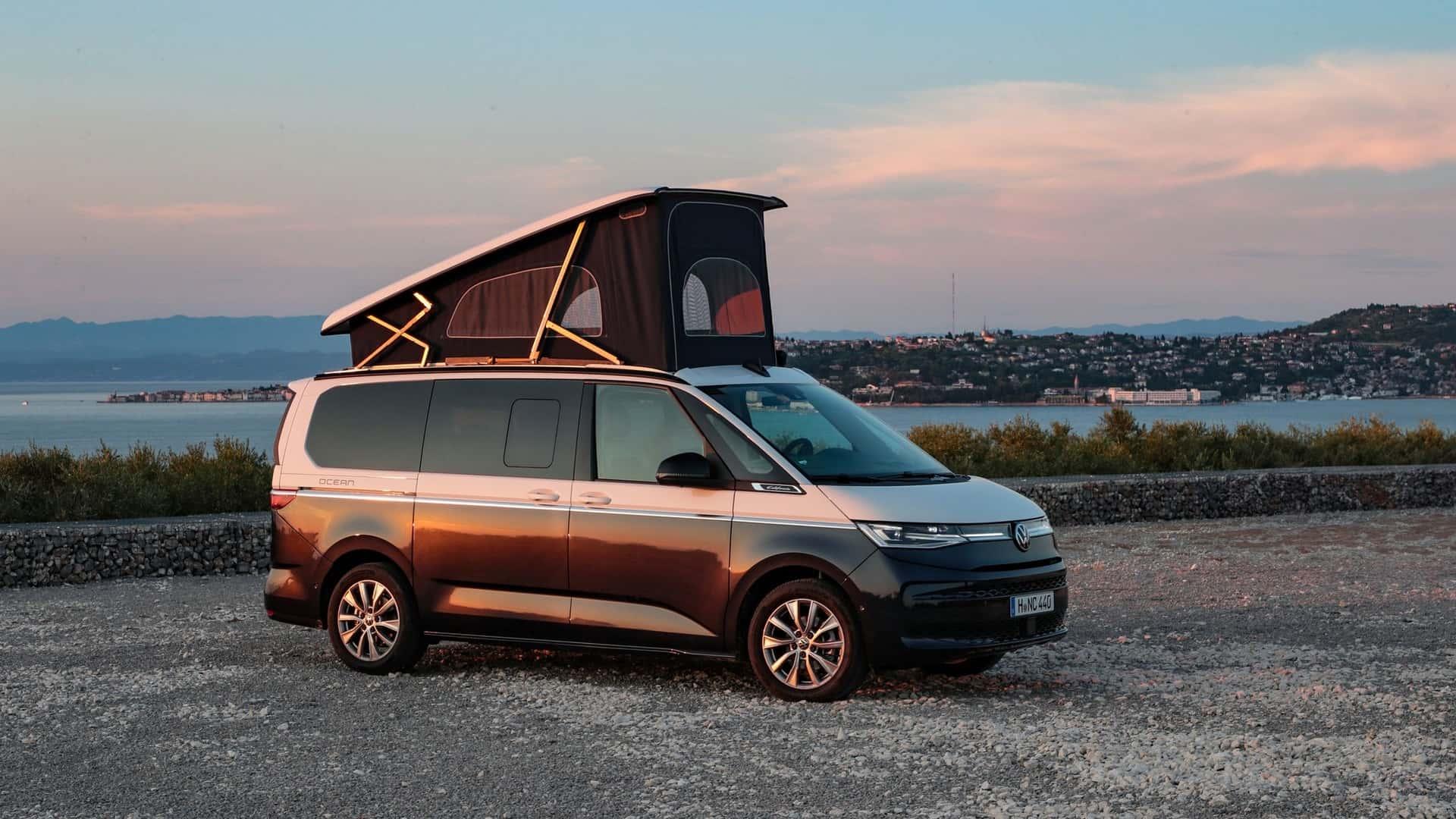
Both let you sleep wherever you stop, but they solve different kinds of trip. We rent out a single vehicle, a Volkswagen California Ocean T7 with a pop-up roof, a kitchen and four berths, and we do not rent motorhomes — so this page is not trying to talk you into anything. There are trips where a motorhome is clearly the better choice, and we will tell you which ones.
The difference that settles most cases is simple: our campervan has no shower and no toilet, and a motorhome does. Everything else that really shapes a trip around Catalonia follows from there — where you can park, what the rules say about parking versus camping, how much water autonomy you need and how many of you are travelling.
Book now
The main difference: a bathroom on board
A motorhome has a bathroom: a cassette toilet and, almost always, a shower cubicle with hot water plus separate tanks for grey and black water. Our California has neither. There is no toilet and no shower inside the van, and we would rather say so now than have you find out on day two of your trip.
In practice, travelling without a bathroom means planning your showers: campsites, service areas, municipal sports centres, beaches with showers in summer. For two people moving on every day it is entirely manageable. If you travel with small children or someone with reduced mobility, or you want to stay put for several days without relying on facilities, a motorhome will make life far easier.
Size: how far each vehicle can take you
The California is just over five metres long and van-width: it fits a normal parking space, threads through the narrow streets of Cadaqués, Begur or Besalú, climbs the hairpins of the Port del Cantó or the Bonaigua without drama and, with the roof folded down, fits into many covered car parks — always check the height limit posted at the entrance. On the approach roads to the Costa Brava coves, often narrow and fitted with height barriers, that difference matters a lot.
A six- or seven-metre motorhome makes you plan every stop: open-access car parks, signposted motorhome areas or campsites. In summer, in the coastal towns, that means arriving early or staying well back from the sea. In exchange you get room to live inside when it rains, which during a Pyrenean autumn is no small thing.
Parking is not camping: how it works in Catalonia
Traffic rules do not ban sleeping inside a vehicle. If it is properly parked where parking is allowed, you may spend the night there. What is regulated is camping, which is something else: putting out a table and chairs, unrolling an awning, chocking or levelling the vehicle, taking up more space than its own footprint, or emptying water outside.
This is where a campervan has the edge: closed up with the roof down, it is simply another parked vehicle. That said, do not assume any particular local rule. Town councils can restrict parking by height, length, area or season, and protected natural areas have rules of their own. Always read the signs where you are and check the municipal bylaw before settling in for the night.
Water, waste water and real autonomy
A motorhome is built to be self-sufficient for several days: a large fresh water tank, separate tanks for grey water and for the toilet, a leisure battery and heating. The price of that autonomy is the housekeeping — tanks must be emptied at proper service points, never on the ground or down a random drain, and you need to know where those points are before you need them.
A campervan plays a different game. Ours has a fridge, a two-burner hob and night heating for winter trips, but the water tank is modest and real autonomy depends heavily on how you cook and how much water you use. The usual approach is to alternate: two or three nights on your own, then a stop at a campsite or service area to fill up, empty out and shower properly.
What the trip costs: fuel, tolls and season
Driving the campervan feels much like driving a large car, and that shows both at the pump and when manoeuvring. A big motorhome uses more fuel and, depending on its maximum authorised mass, can fall into a higher band at some tolls and on ferries. It is also a vehicle you are unlikely to use for the weekly shop on the days you are not travelling; the campervan, you would.
Our rental runs from €85 to €139 per night depending on the season — low from November to March at €85/night, mid from April to June and September to October at €105/night, high in July and August at €139/night — with a 3-night minimum (7 nights in high season) and pick-up in Mataró, north of Barcelona. We will not quote other companies' motorhome prices as if they were our own figures: if you are comparing, ask both sides for a quote on your exact dates and add campsites, fuel and tolls on top.
How many people, which licence, and who wins
The California is homologated for four sleeping places: a double bed downstairs and another in the pop-up roof. For two people it is generous, and for a family of four it works if you are happy sharing a small space with no bathroom. From five people up, or for long trips with bulky luggage, a motorhome is simply the right answer.
On licences: the campervan is driven on a standard category B licence, with no special requirement. So are many motorhomes, but only up to 3,500 kg maximum authorised mass; above that you need a C1. Check the specific model's registration document, because a loaded vehicle with water and passengers on board gets close to that limit surprisingly easily. If a compact campervan is what you are after, write to hola@campervan.cat or WhatsApp +34 669 91 20 57, or check your dates directly at /reservar.
Frequently asked questions
Is it legal to sleep in a campervan in Catalonia?+
Spending the night with the vehicle closed is legal wherever parking is allowed, because what the rules regulate is camping — awnings, tables, chairs or emptying water outside. Town councils may restrict parking for long or tall vehicles and protected natural areas have their own rules, so always read the signs where you are.
Does your campervan have a shower and a toilet?+
No. The Volkswagen California Ocean carries neither a shower nor a toilet on board, and that is the biggest difference from a motorhome. Most of our customers alternate free nights with stops at campsites or service areas to shower and empty waste.
Do I need a special licence for a motorhome?+
A category B licence covers vehicles up to 3,500 kg maximum authorised mass, which includes our campervan and many motorhomes. Above that mass you need a C1 licence, so it is worth checking the registration details of whichever model you plan to rent.
How many people can sleep in it?+
Four: two in the lower bed and two in the pop-up roof bed. For two people the space is very comfortable; for four it is tight but workable if you all get along.
How much does your campervan cost to rent?+
Between €85 and €139 per night depending on the season, with a minimum stay of 3 nights (7 in July and August) and pick-up in Mataró. The booking calendar shows the exact price for your dates before you pay anything.
What are your rental requirements?+
You must be 26 or older, hold a category B licence for at least 2 years, bring a valid ID card or passport and a credit card in your name. The security deposit is €1,500 taken as a pre-authorisation: the amount is held on the card and there is no actual charge if there are no incidents.