Travelling with a dog by campervan in Catalonia
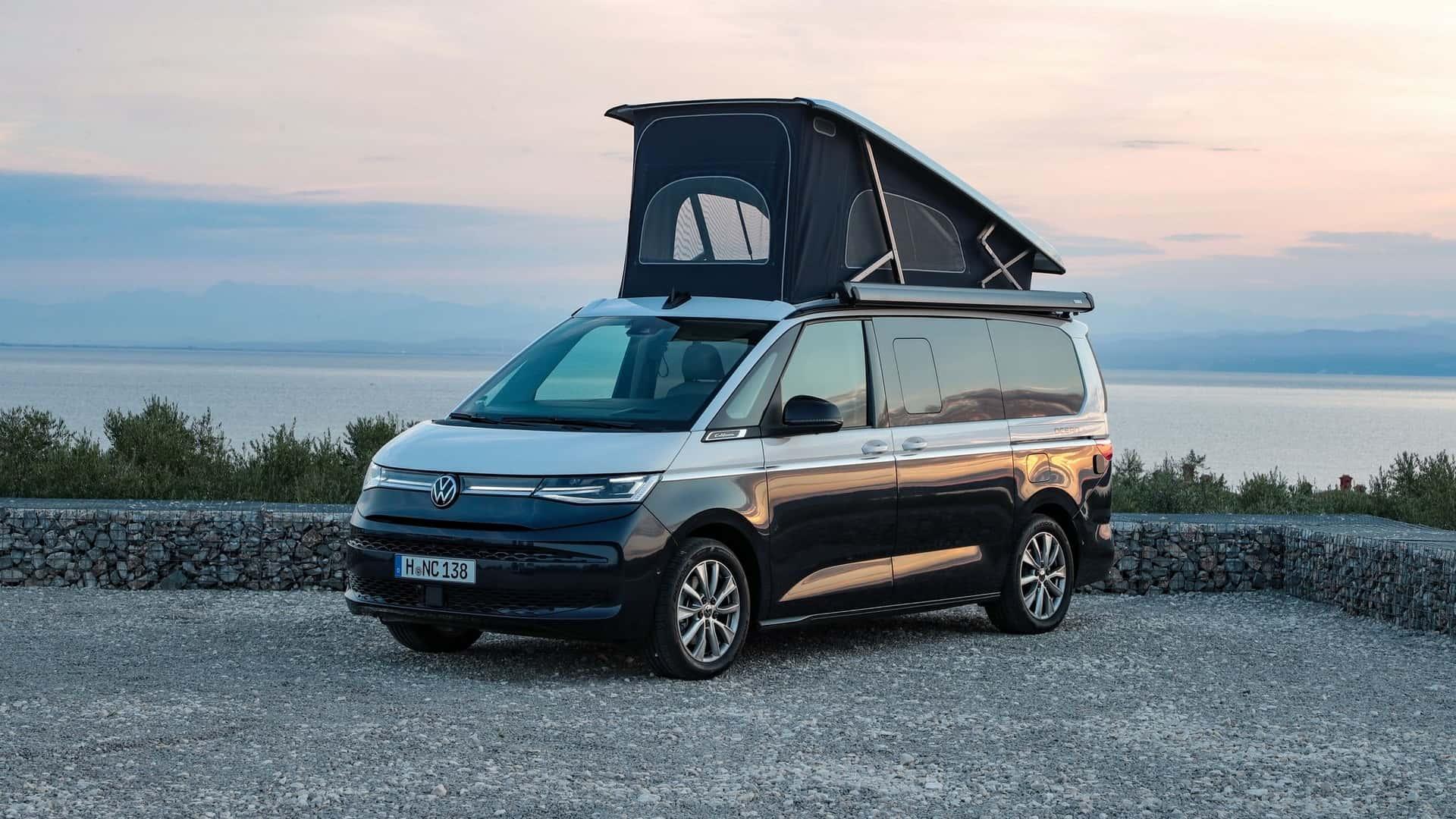
Dogs are welcome in our Volkswagen California Ocean T7. There is a dog fee of €80 per rental — not per night, whatever the number of dogs — which you add as an extra when booking and which covers the cleaning and the extra preparation of the van; we also ask that you tell us in advance and bring it back clean. It has a pop-up roof, a kitchen and four beds, and you collect it in Mataró, on the Maresme coast, half an hour from Barcelona.
Travelling with a dog in a campervan is straightforward, but it comes with rules worth knowing before you set off: how the dog must be restrained while driving, which beaches allow dogs and which do not, which Catalan nature parks keep them out, and how to handle summer heat inside a van.
Book now
How your dog must travel while you drive
Spanish traffic rules do not allow an animal to move freely around the cabin or to interfere with driving. In practice that means a certified harness with a double attachment to a rear seat belt, or a crate anchored and placed on the floor. Never loose on the passenger seat, never with its head out of the window and never on anyone's lap.
In the California the sensible spot is the rear bench with a harness, or the rear footwell with a correctly sized crate. Once the lower bed is folded out the rear is no longer a safe place while moving, so stow the bed before setting off. A stop every couple of hours for water and a stretch makes the drive far calmer for everyone.
Beaches where your dog can swim
The Maresme and the Costa Brava both have signposted dog beaches, but not every town has one and the dates change every year: many only admit animals outside the bathing season, from October to May, while a few keep a marked stretch open all year. The practical rule is to check the town's own by-laws the same week you travel, because this is information that is revised each season.
Outside those designated stretches, dogs are usually banned from the sand in summer even on a lead, and fines do happen. As an alternative, the small coves of the Baix Empordà and the rocky sections of the Camí de Ronda coastal path are far more forgiving first thing in the morning, when nobody is around and the sand has not yet started to burn paw pads.
Nature parks where dogs are not allowed
Dogs may not enter the Aigüestortes i Estany de Sant Maurici National Park at all, not even on a lead. It is the strictest restriction in Catalonia and it catches out plenty of people who drive all the way there with the dog on board, so if your route crosses the Pallars, plan that day around the neighbouring valleys instead.
At Cap de Creus and the Ebro Delta the limits are partial: there are strict reserves and nesting areas where access with a dog is banned or restricted during the breeding season, while the main tracks accept dogs on a lead. In the Garrotxa Volcanic Zone and the rest of Catalonia's nature parks you can walk with your dog on a lead, and that is what we would do everywhere even where no sign says so: there is livestock, wild boar and ground-nesting wildlife around.
Summer, heat and shade
July and August are the critical part of travelling with a dog in a van. A closed vehicle in the sun passes 50 °C within minutes, and an open pop-up roof does not fix that if the air is not moving. The rule is simple and has no exceptions: the dog is never left alone inside the van in the sun, not for five minutes, not with the windows half open.
That means running the day the other way round from how you would without a dog: walks and beach early and at dusk, midday parked in the shade with the sliding door open and the insect screen in place, and always a water container and a bowl within reach. If you cannot hold your hand on the asphalt or the sand for five seconds, your dog should not be walking on it either. It is why many people travelling with an animal pick spring or October — which also happens to be when the van is cheapest.
Where to sleep with a dog
Most Catalan campsites accept dogs, but nearly all of them ask you to say so when booking, and some cap the number or the size, or keep specific pitches for guests with animals. Phone ahead rather than just turning up: in high season the animal quota is often full even when pitches are still free.
Motorhome service areas are rarely a problem, but they are shared, unfenced spaces: the dog has to stay on a lead and cannot be left alone barking. Inside the California there is plenty of room, on the lower bed or at your feet; what never works is leaving the dog outside all night, in summer or winter.
Paperwork, requirements and prices
Your dog needs an identification microchip and a health record with an up-to-date rabies vaccination. If you plan to cross the border into France, Andorra or beyond, it also needs the EU pet passport, issued by your vet on the basis of the microchip and the rabies vaccine. The van can be driven anywhere in Europe at no extra cost, with 24/7 roadside assistance included.
To rent you must be 26 or older, hold a category B licence for at least 2 years, and bring an ID card or passport plus a credit card in your name. The security deposit is €1,500 taken as a pre-authorisation: the amount is held and never actually charged if there are no incidents. Prices run from €85 to €140 per day depending on the season (low from November to March, mid from April to June and September to October, high in July and August), with a 3-night minimum. If you are travelling with a dog, add the €80 dog fee per rental. You can check dates and book at /reservar.
Frequently asked questions
How much does travelling with a dog cost?+
Yes: there is a dog fee of €80 per rental. It is not per night and not per animal — it is €80 for the whole rental, however many nights you are away and however many dogs you bring. You add it yourself as an extra during booking, and it covers the cleaning and the extra preparation of the van. Beyond that, we only ask that you tell us in advance and return the van clean.
How must the dog travel on the road?+
Restrained, always: a certified harness with a double attachment to a rear seat belt, or an anchored crate. Spanish traffic rules do not allow the animal to move freely around the cabin or to interfere with driving.
Can I leave the dog alone inside the campervan?+
In summer, never: the interior turns into an oven within minutes even when it looks shaded. In winter and out of direct sun, short spells with cross-ventilation and water. If you have a visit where dogs are not admitted, it is better to do it at another time of day.
What paperwork does the dog need?+
A microchip and a health record with a valid rabies vaccination for travel within Catalonia and the rest of Spain. To cross the border into France or Andorra, the EU pet passport.
What are the requirements for me to rent?+
You must be 26 or older, hold a category B licence for at least 2 years, and bring an ID card or passport plus a credit card for the €1,500 security deposit, which is pre-authorised and not charged if there are no incidents.
Can I bring more than one dog?+
Tell us how many and what size when you book and we will confirm. Write to hola@campervan.cat or WhatsApp +34 669 91 20 57. Bear in mind the California sleeps four and space is limited: with two large dogs and four people, the luggage needs rethinking.